Swiss payroll compliance in Q4: how to prepare for accurate year-end and Q1 reporting
In Q4, Swiss small and medium businesses (SMBs) must shift attention from routine payroll operations to preparing for critical year-end compliance and reporting obligations.

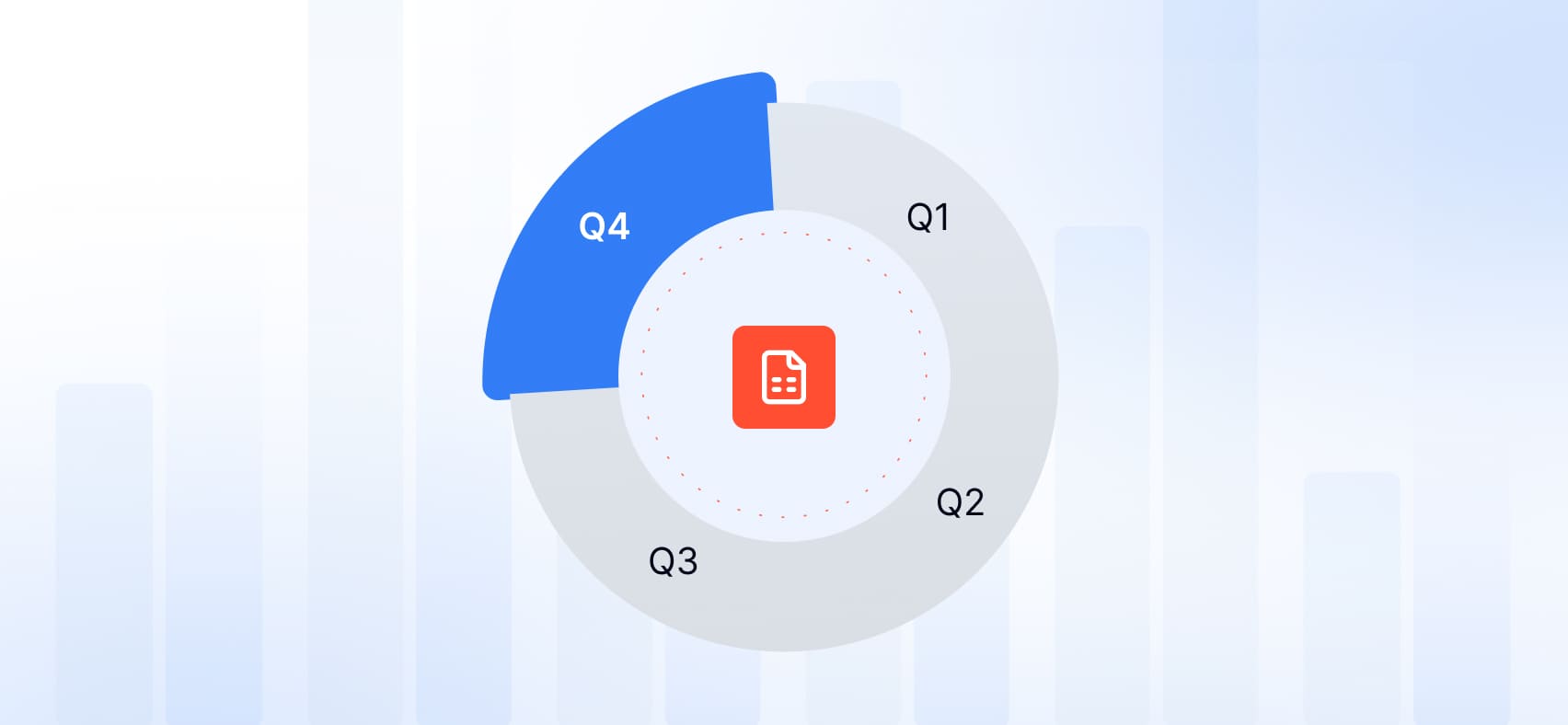
While payroll activities in Q1–Q3 largely involve calculating salaries, making standard deductions, and submitting regular social security contributions, Q4 is dedicated to preparing all necessary year-end reconciliations, adjustments, and audits ahead of formal submissions in the following year.
In Switzerland, where compliance is strictly enforced and penalties for errors or delays can be significant, a thorough Q4 closing process is essential. It ensures your business can submit accurate year-end declarations, protects employees from tax complications, and strengthens your company’s financial integrity.
This payroll compliance guide walks you through the key payroll tasks to prepare in Q4, highlights common pitfalls, and provides the knowledge needed to achieve smooth and compliant year-end payroll reporting.
Key payroll compliance tasks in Q4
Year-end social security reconciliation and payroll adjustments
Swiss businesses pay provisional social security contributions (AHV/IV/EO, ALV,UVG/KTG) based on an estimated annual wage bill. To ensure compliance, employers must reconcile these contributions against the actual total wages for the calendar year, including bonuses, the 13th salary, and other year-end payroll adjustments.
Q4 tasks (Preparation):
- Review all employee salaries, including bonuses and the 13th salary.
- Verify employee entries, exits, terminations, and new hires.
- Ensure pro-rata salary and bonus calculations are correct for partial-year employment.
- Check for necessary adjustments to social security, pension contributions, and taxable benefits.
- Accrue unpaid bonuses for accurate year-end financial reporting.
- Review annual leave balances and accrue any compensable unused vacation.
- Audit withholding tax data for foreign employees (civil status, canton of residence, and correct tariff codes).
- Conduct a final internal payroll audit to validate all master data, benefits, deductions, and contributions. Confirm that final payroll data matches the AHV/IV/EO wage declaration to avoid discrepancies.
After December payroll (Finalisation):
Once the final payroll run of the year is processed and the data is complete, you can finalise your mandatory year-end reporting:
- Submit the definitive AHV/IV/EO wage declaration to the Compensation Fund.
- Send the annual UVG/KTG wage reports to your insurance providers.
- Finalise any BVG adjustments, including insured salaries, minimum thresholds, and the coordination deduction.
- Ensure bonuses and the 13th salary are correctly included in social security reporting and in salary certificates.
Note: Bonuses and the 13th salary are treated as regular salary for both tax and social security purposes. Any unpaid amounts should be accrued in Q4, while final reporting occurs after the December payroll in Q1.
Preparation of the mandatory salary certificate
The salary certificate is the single most important document you issue to every employee. It summarises all compensation and deductions for the year and serves as the foundation of their personal Swiss tax return.
Q4 tasks (Preparation):
- Prepare preliminary drafts for each employee.
- Verify Box 15 allowances, deductions, and remarks.
- Ensure that all benefits, expense allowances, and taxable items are correctly classified.
After December payroll (Finalisation):
Once all year-end salary data is final, the following actions are required to complete the Salary Certificate process:
- Finalise total wages, bonuses, the 13th salary, and termination payments.
- Issue the completed Salary Certificates to employees.
- Submit the electronic wage data via Swissdec-compliant software where required.
Payroll compliance deadline checklist
While the final preparation is done in Q4, the actual submission deadlines for the year-end reports fall into the following year. Missing these final submission deadlines carries direct financial consequences.
| Key Compliance Report | Submission Deadline | Importance |
| AHV/IV/EO Final Wage Declaration (via Swissdec) | January 30 | Critical. Final reconciliation of the estimated vs. actual annual wage bill. |
| UVG/KTG Annual Wage Declaration | January 30 | High. Final reporting for accident and sickness insurance premium settlement. |
| Issuance of Salary Certificates (Lohnausweis) | Mid-January (best practice) | Critical. Employees need this for their personal tax filing. |
| Withholding Tax (Quellensteuer) Annual Reconciliation | March 31 | High. Employees taxed at source may request a correction or full assessment by this date. Employers must ensure accurate year-end withholding. |
Common mistakes in payroll compliance for Q4
Drawing on our experience, we often see SMBs stumble over specific details when wrapping up the financial year internally:
- Mismanaging annual leave balances: At year-end, it’s important to ensure all employee vacation is accounted for. While employees are encouraged to use their statutory annual leave during the year, any unused leave must be either carried over according to the contract or paid out. A common mistake is failing to calculate and record the residual leave accurately in December payroll, particularly for employees leaving the company. This accrual should be documented as a monetary value for correct accounting and payroll reporting.
- Incorrect withholding tax conversions: For foreign employees subject to tax at source, a common error is forgetting to update their tax tariff when civil status changes (e.g., marriage, birth of a child) or when they move to a different canton. Q4 is the ideal time to audit all tax-at-source master data to ensure correct codes are applied, preventing discrepancies during payroll compliance reporting.
- Neglecting the BVG coordination deduction: The BVG minimum entry threshold and the coordination deduction (the part of the salary assumed to be covered by AHV) are subject to change. A critical year-end mistake is forgetting to adjust these parameters for the new year before the January payroll is run. This results in incorrect pension contributions for the new year, affecting both your obligations and your employees’ retirement savings.
- Misreporting employee benefits and allowances: A frequent error is incorrectly classifying or failing to report fringe benefits, expense allowances, or other taxable and non-taxable benefits. Q4 is the ideal time to review all benefits and ensure correct classification to meet year-end requirements for payroll compliance in Switzerland.
Let LedgerPeek handle all your payroll obligations
Payroll reporting compliance is paramount for every Swiss business – mistakes or missed deadlines can trigger costly administrative fines, necessitate disruptive retrospective corrections, and lead to unwarranted increases in your provisional social security rates for the following year.
However, as a business owner, you don’t need to navigate all of this alone. At LedgerPeek, we provide comprehensive payroll compliance services, handling all your business’s payroll obligations every month. As a result, you have more time to focus on strategic decisions and growth initiatives that truly require your attention, while tasks such as calculating salaries, overtime, bonuses, and deductions, tracking deadlines, and preparing and submitting complex year-end reports are fully managed by our experts.
Book a consultation with our specialists today – and ensure your business closes the year accurately, efficiently, and with the peace of mind that all payroll and reporting obligations are in order.