
The essential Swiss year-end closing checklist for businesses
For most Swiss businesses, the final quarter of the year feels like a sprint — finishing client projects, reviewing budgets, preparing internal reports and, of course, closing the financial year.

While the 31st of December may simply mark the end of the calendar to some, for companies it signals an important turning point. A clean and well-organised year-end closing lays the foundation for a smooth audit, accurate tax filing, and clarity in strategic planning for the coming year.
In this guide, we break down the essential steps your company should take before 31 December and the checklist you should follow after year-end.
Before 31 December — prepare, review, adjust
The period leading up to the year-end is your chance to tidy up finances, fix discrepancies and optimise your tax position. Think of it as the “housekeeping phase” — everything you organise now saves you time and stress later.
1. Verify and update accounting records
Before you officially close the accounting period, make sure your accounts reflect reality. This includes:
- Ensuring all supplier invoices have been booked
- Recording customer payments and chasing outstanding invoices
- Matching booking records with bank statements
- Updating petty cash logs
Skipping this step can lead to incorrect results — something that may affect tax estimations or create unnecessary work during audit.
Example:
If a customer paid you in early December but the payment was recorded in January, your income will be shifted to the wrong year. A quick review avoids such mistakes.
2. Review open invoices and payments (debtors & creditors)
Swiss SMEs often lose time — and money — by overlooking open invoices. Before 31 December, check:
- Have you billed all completed services?
- Are there old unpaid receivables you can follow up?
- Are there supplier bills you still need to book?
If an invoice seems uncollectible, consider setting up a provision. This ensures your accounts reflect expected reality rather than hopeful assumptions.
3. Manage inventory and assets
For product-based businesses, a physical inventory count is mandatory at year-end. Compare the actual count with your book inventory and correct any deviations. This reduces valuation differences and gives you a realistic overview of the margin.
In addition:
- Review depreciations on fixed assets
- Write off obsolete stock if necessary
- Register newly purchased equipment or company devices
4. Expense planning — optimise before the year closes
Year-end is a crucial time to check whether certain investments or expenses should be recognised in the current year — particularly for tax optimisation.
Possible deductible items include:
- Equipment purchases
- Software or licence renewals
- Staff training costs
- Marketing and brand development expenses
If a planned investment supports operations and can reduce your tax burden, completing it before December 31 may be beneficial.
5. Payroll and social security preparations
Payroll always requires special attention at year-end. Check:
- All employee data is correct (AHV number, salaries, allowances)
- Holiday balances and overtime are properly recorded
- Bonuses or year-end payments are declared correctly
- Social security and pension fund contributions are up to date
If there are planned salary adjustments, clarify whether they apply to the current year or the next one.
6. VAT reconciliation (MWST)
Swiss VAT can quickly become complex. Before year-end, review:
- VAT booking accuracy (Input vs Output tax)
- Correct treatment for mixed or exempt operations
- Whether you fall under the effective or balance tax method
This is the best moment to identify misclassifications and correct them while the year is still open.
7. Internal review and strategic evaluation
Year-end closing is not only about numbers — it also presents the opportunity to reflect on performance.
Ask yourself:
- What was your revenue vs. expectation?
- Where were the biggest costs?
- Which products/services performed best?
These insights later feed into your budgeting and planning for the upcoming year.
After 31 December — close, report, file
Once the fiscal year has officially ended, it’s time to finalise your accounts. The goal is to transform prepared documents into a polished set of financial statements ready for tax submission and strategic use.
1. Reconcile all bank accounts
Every Swiss business — even small ones — must reconcile bank statements with the accounting system. Check:
- Bank accounts
- Credit cards
- PayPal, Stripe, SumUp or other digital payments
Differences must be clarified immediately while records and receipts are still fresh.
2. Calculate and post depreciation
Update asset depreciation according to your chosen accounting standard. Typical fixed assets include:
- Machinery
- Company vehicles
- Computer equipment
- Office furniture
If an asset is fully depreciated or no longer in use, remove it from the active register.
3. Create accruals and provisions
Some costs belong to the closing year but are billed later — typical examples include:
- Invoices not yet received (utilities, insurance, subscriptions)
- Bonuses decided but not paid
- Holiday accruals
- Legal or financial provisions
Posting accruals ensures your financial statements reflect the true performance of the year.
4. Prepare salary declarations
At the start of the year, every employee must receive:
- Annual salary certificate
- Social security confirmations
- Pension fund and accident insurance statements
Timely completion prevents HR bottlenecks and supports a clean audit trail.
5. Annual financial statements
With everything in place, you can put together your annual financial statements — the documents that give you, your advisors, and the authorities a full picture of your business’s financial position. You should include:
- Balance Sheet
- Profit & Loss Statement
- Notes and supporting schedules (depending on company size)
Clear, well-structured statements help with decision-making, audit preparation and banking negotiations.
6. Final VAT declaration
Once the books are closed, file your final VAT report for the period. Double-check:
- Tax code applications
- Cross-border transactions
- Deduction of input VAT
A correct submission prevents future corrections and penalties.
7. Tax submission to cantonal authorities
Swiss SMEs must submit their annual tax declaration to the tax office together with supporting documents.
Prepare:
- Annual financial statements
- Depreciation tables
- Inventory valuations
- Justifications for provisions
Missing deadlines may result in fines — early preparation gives you time to clarify questions with authorities.
Simplify your business accounting close with LedgerPeek
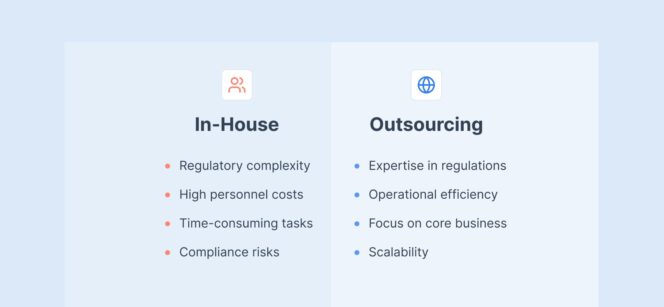
Finalising your accounts is not merely a routine task — it is a critical step that lays the foundation for your business’s financial stability. When done correctly, it provides a clear picture of your finances, reduces the risk of tax errors, and allows your business to begin the new period with confidence. On the other hand, incomplete or inaccurate closing can create delays, require corrections, and lead to unnecessary administrative work.
At LedgerPeek, our specialists take care of the entire accounting close process for your business, so you do not have to worry about any part. With LedgerPeek managing your accounts, you can focus on running your business while we ensure your financial close is accurate, thorough, and stress-free.
Book a consultation with our specialist today – and avoid the pressure that comes from trying to finalise accounts under tight deadlines.